Main content blocks
Section outline
-
Overview
This module will help students understand cyberbullying, its causes, consequences, and prevention strategies. It explores risk and protective factors, the legal implications of online harassment, and how digital literacy can help prevent cyberbullying.
Learning Outcomes
By completing this module, students will be able to:
- Recognize cyberbullying and distinguish it from traditional bullying.
- Understand risk factors that contribute to online harassment and how to reduce vulnerability.
- Identify the psychological and legal consequences for both victims and perpetrators.
- Develop coping strategies, including digital safety skills, emotional resilience, and prosocial behaviors.
- Promote a positive online environment by recognizing warning signs, seeking support, and intervening responsibly.
This module will empower students with digital literacy and social skills to navigate online spaces safely and combat cyberbullying effectively.
For technical issues, contact learn-platform@aimediatorsproject.eu.
-
We suggest you watch this introductory video to familiarize yourself with the knowledge you will gain in the course.
-
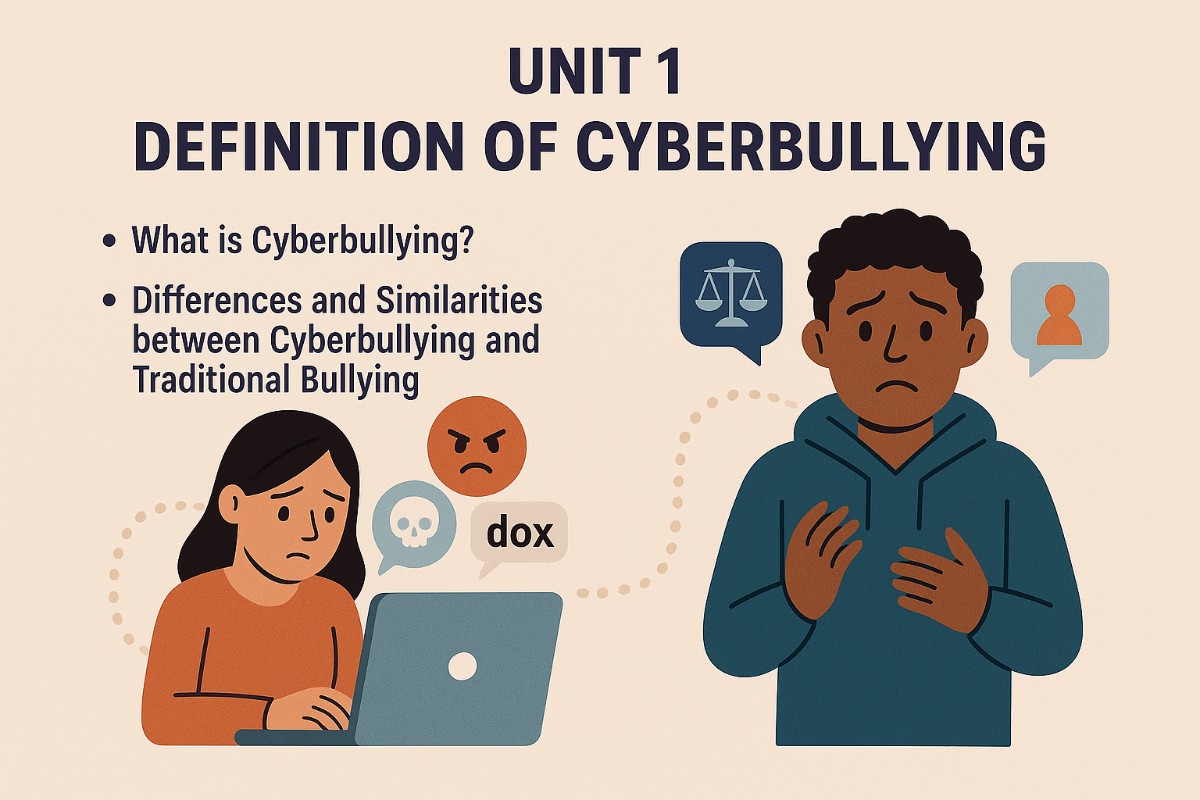
This unit defines cyberbullying, highlighting its key elements: intention to harm, power imbalance, repetition, and virtual space. It explores how cyberbullying differs from traditional bullying due to anonymity, wider reach, and lack of physical boundaries, making it more persistent and harmful. Various forms, such as harassment, doxing, and exclusion, are discussed, along with the role of gender and social factors. The unit emphasizes the challenges of addressing cyberbullying in the digital age and encourages reflection on its impact.
-
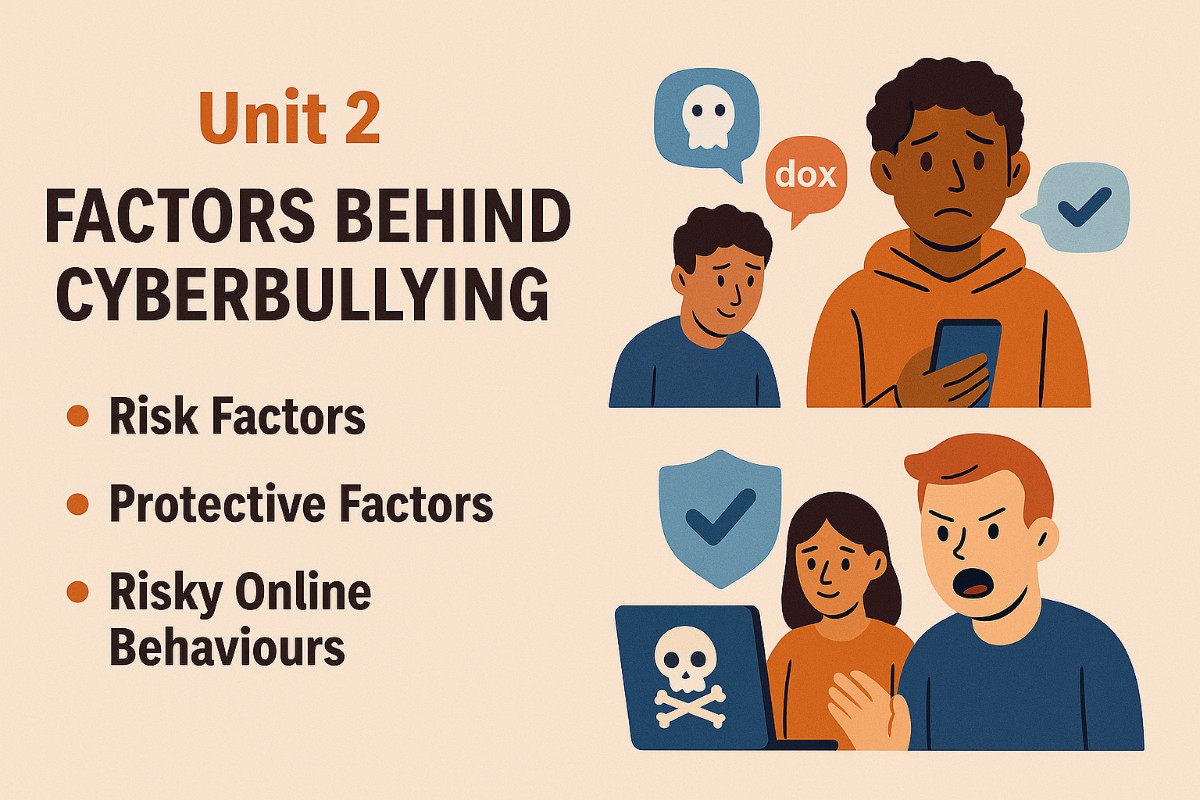
This unit explores the factors behind cyberbullying, identifying key risk factors such as excessive online activity, low self-esteem, lack of social skills, and anonymity. It also highlights protective factors, including strong parental supervision, digital literacy, and emotional resilience. Additionally, it discusses risky online behaviors, offering practical tips to help students stay safe, avoid harmful interactions, and report cyberbullying effectively. The unit encourages reflection on how online habits impact vulnerability to cyberbullying and ways to foster a safer digital environment.
-
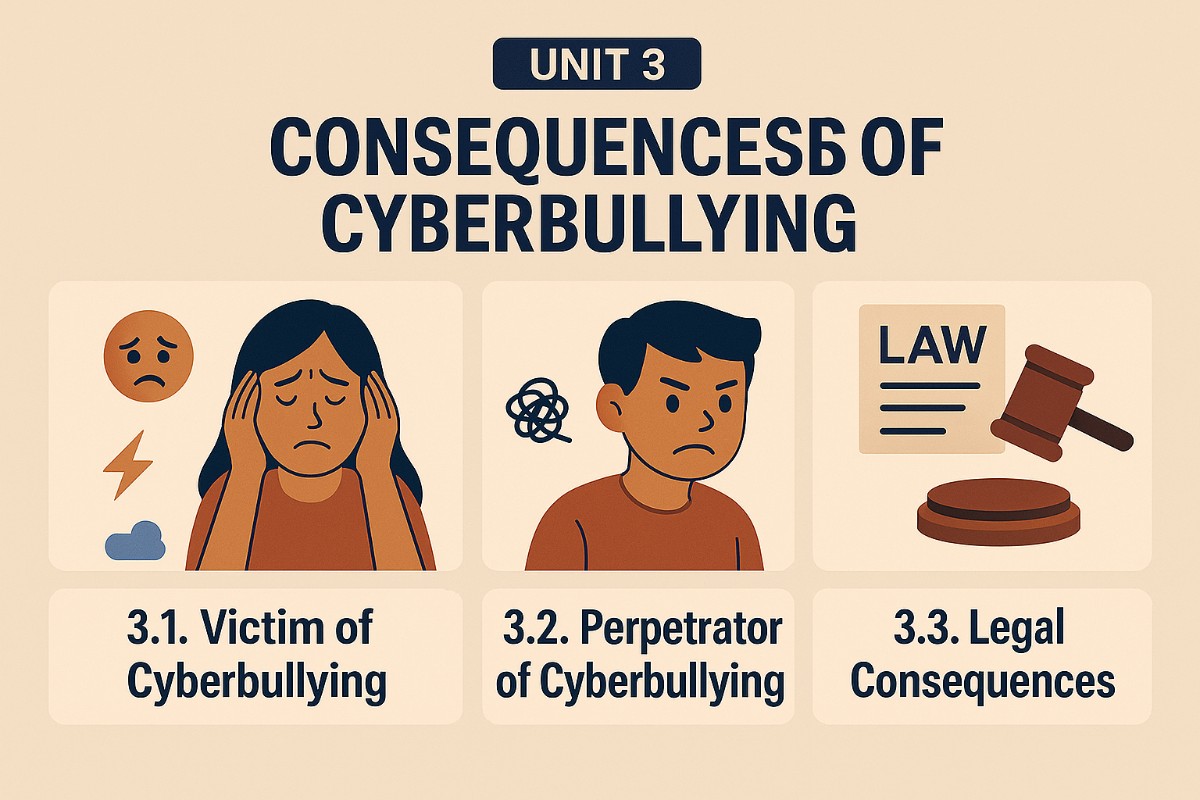
This unit examines the consequences of cyberbullying for both victims and perpetrators, highlighting its psychological, social, and legal impacts. Victims often experience anxiety, depression, social withdrawal, poor academic performance, and, in severe cases, suicidal thoughts, while perpetrators may struggle with low self-esteem, aggression, and behavioral issues. The unit also outlines legal consequences across different countries, emphasizing how laws are evolving to combat online harassment and protect individuals' rights. Understanding these consequences is key to preventing cyberbullying and fostering a safer digital environment.
-
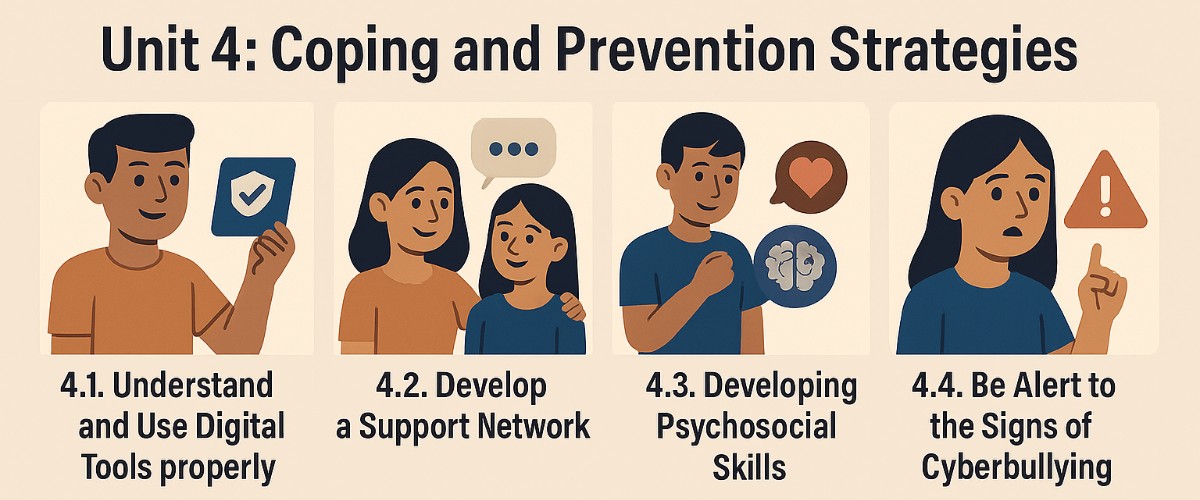
This unit outlines coping and prevention strategies to help students avoid involvement in cyberbullying as victims, perpetrators, or bystanders. It emphasizes digital literacy, including protecting personal data, setting privacy controls, and practicing respectful online communication. It also highlights the importance of social support networks, empathy, assertiveness, emotional regulation, and conflict resolution skills to build resilience. Students are encouraged to recognize cyberbullying signs, seek help, and intervene responsibly to create a safer and more respectful digital environment.
-
-
If you wish, you may read or download the theory in a PDF format.
-
This file contains a list of additional materials that you can browse to deepen your knowledge on the topic of cyberbullying.
-
-
The following set of practical exercises will help you to apply in practice the knowledge gained from the course.
-
After completing the course, please take some minutes to complete the present questionnaire to assess the overall e-Course.
Your feedback will help us to improve the content as well as the technical design of the platforms.
Thank you!
-
To receive the certificate, you must successfully complete the quiz.
Requirements for the successful completion of the quiz:
- Score: 80%
- Max. effort limit: 3.